Modern Italian Restaurant NYC vs. Old-School Red Sauce: What Actually Changes on the Plate
Tony Marchetti · September 7, 2026 · 6 min read
Modern Italian Restaurant NYC vs. Old-School Red Sauce: What Actually Changes on the Plate
A modern Italian restaurant NYC diners now book weeks out for and an old-school red-sauce joint two blocks away can serve completely different meals, even when both call themselves Italian. The difference isn’t the tablecloths or the wine list length — it’s what actually lands on the plate. Old-school rooms build around long-simmered tomato sauce, breaded and fried proteins, and pasta as a side course before the main event. Newer rooms treat pasta as the main event itself, lean on regional Italian technique instead of Italian-American invention, and pour natural wine instead of a house Chianti. Here’s what changes, dish by dish, and where to taste both.
So, What’s Actually Different?
Three things change between an old-school Italian-American dining room and a modern Italian restaurant NYC kitchen: the sauce, the role pasta plays, and the pacing.
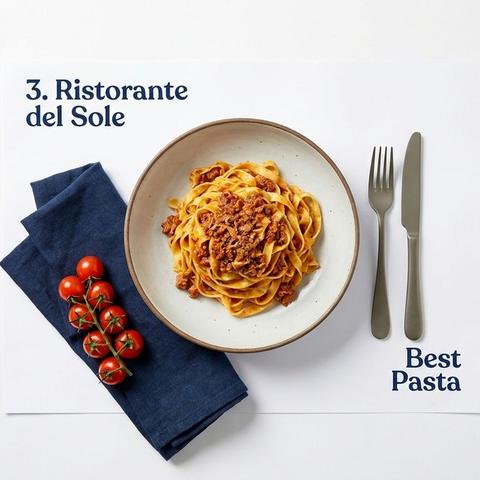
Old-school kitchens simmer one tomato-based gravy for hours and use it everywhere — under meatballs, over baked ziti, alongside a veal cutlet. Modern kitchens build a different sauce for nearly every pasta shape, often without tomato at all: brown butter and sage, duck ragù, nduja, black garlic.
Old-school menus lead with breaded, fried, cheese-covered proteins — chicken parm, veal parm, eggplant parm — with pasta as a warm-up course. Modern menus lead with the pasta itself, sometimes offered as a multi-course regional tasting, with proteins built as smaller secondi rather than the centerpiece.
Pacing follows the same split. Old-school dinners are family-style and unhurried, built for a table splitting platters. Modern dinners run closer to a tasting menu, portioned per person, on a reservation clock.
At a Glance: Old-School Red Sauce vs. Modern Italian
| Old-School Red Sauce | Modern Italian | |
|---|---|---|
| Signature sauce | Long-simmered tomato gravy | Region-specific ragù, often tomato-free |
| Pasta’s role | Side course before the entrée | The main event, sometimes a tasting |
| Proteins | Breaded and fried (parm-style) | Grilled, braised, or Milanese-style |
| Wine list | House Chianti, red-heavy | Natural and small-producer bottles |
| Dining room | Tableside captains, banquettes | Open kitchens, counter seating |
| Pace | Family-style, unhurried | Per-person courses, reservation-driven |
Where Old-School Red Sauce Still Rules
Carbone, Greenwich Village
Carbone, at 181 Thompson Street in Greenwich Village, is the modern era’s biggest tribute to the old-school format — a spicy rigatoni and a veal parmesan built around tableside theater, on a menu that reads like 1958 even though the restaurant opened in 2013. Nearest stops are W 4th St–Washington Sq (A/C/E/B/D/F/M) and Bleecker St (6).
John’s of 12th Street, East Village
A few blocks north and east, John’s of 12th Street, at 302 E 12th Street, has run a red-sauce menu from the same East Village address since 1908 — candles that have been dripping for decades, a traditional menu built around chicken parm and baked pasta, and a full vegan menu it has kept running for more than ten years. Nearest transit is Astor Place (6) or Union Square (4/5/6/L/N/Q/R/W).
Rao’s, East Harlem
Rao’s, at 455 E 114th Street in East Harlem, is the extreme version of the format: about ten tables, largely no printed menu, and a kitchen that has been making the same veal-pork-beef meatballs since 1896. It’s shorthand for old-school precisely because so little has changed — a table there is famously hard to get outside of regulars. Nearest transit is the 6 train at 116th St or Metro-North’s Harlem–125th St stop.
For a broader look at how New Yorkers weigh these old-school strongholds against everything else on the menu map, how New Yorkers actually pick a restaurant breaks the decision down past just the food.
What Changes on a Modern Italian Restaurant NYC Menu
Rezdôra, Flatiron
Rezdôra, at 27 E 20th Street in the Flatiron District, is built entirely around the pasta of Emilia-Romagna — maccheroni with duck ragù, strozzapreti with rock shrimp — served as a regional tasting rather than a single starter-then-entrée sequence. It’s a Michelin-starred kitchen where pasta is the whole meal, not the warm-up act. Closest subway is 23rd St (N/R/W or 6).
Don Angie, West Village
Don Angie, at 103 Greenwich Avenue in the West Village, keeps the Italian-American vocabulary — lasagna, garlic bread, meatball ragù — but reworks the form: the restaurant’s pinwheel lasagna is rolled and sliced like a terrine, and a chrysanthemum salad and black cocoa tiramisu push the menu somewhere old-school kitchens don’t go. It’s the clearest example here of a kitchen using Italian-American memory as raw material instead of a formula to repeat exactly. Nearest stops are 14th St (A/C/E/L/1/2/3) and Christopher St–Sheridan Sq (1).
For more on what separates a real ragù from a jarred one, regardless of which category a kitchen falls into, what a real ragù looks like is worth reading before you order.
Isabelle’s Osteria: A Gramercy Park Example of the Modern Approach
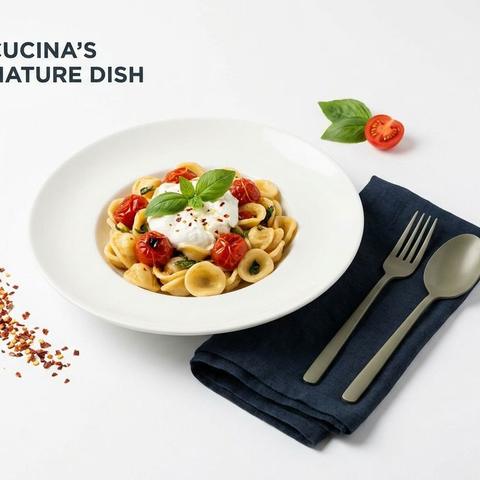
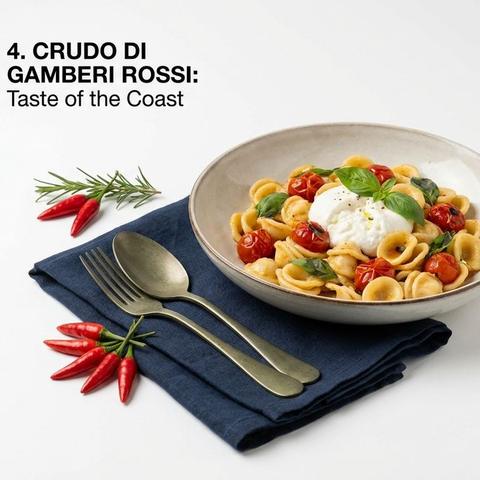
Isabelle’s Osteria, at 245 Park Avenue South in Gramercy Park (between 19th and 20th Streets), fits the modern-Italian side of this comparison for the same reason Rezdôra and Don Angie do: the menu is built around handmade pasta and seasonal dishes rather than a fixed roster of parm plates. Per the restaurant’s site, the kitchen blends traditional technique with modern touches — crispy calamari with garlic mayo, mussels in nduja butter, a pork chop Milanese finished with pickled peppers.
It suits a different occasion than the rooms above: a weeknight dinner for two, a lunch near Union Square, or a weekend brunch — the chicken and waffle arrives with a Calabrian chili syrup, a detail that wouldn’t turn up on any Sunday-gravy menu in this piece. One currently-verified feature worth knowing before you go: Isabelle’s runs some of the longest hours on this list, open from 10am Saturday and Sunday straight through dinner service.
The next step is simple: view Isabelle’s current menu before booking, since the seasonal dishes rotate. The restaurant sits a short walk from the 23rd St stations (N/R/W, 6) and Union Square, in the same stretch covered in where to go for Italian dinner in Gramercy, block by block.
Frequently Asked Question
Do I need a reservation for the old-school spots or the modern ones?
Both categories generally require booking ahead, but for different reasons. At the old-school rooms in this piece, tables are limited and long-running regulars fill them, so same-week availability is rare no matter how far ahead you plan. At the newer, tasting-driven kitchens, walk-in seats occasionally open at the bar or counter, but the main dining room books up through standard online reservations. Calling ahead or checking a reservation platform the same week is the safer move for either style, and early weekday seatings tend to be the easiest to land regardless of category.
Which One Should You Book?
Let the occasion pick the category rather than the neighborhood. Choose a red-sauce room for a big-table, unhurried night when a shared platter of baked ziti and a veal parm feels right. Choose a modern Italian restaurant NYC kitchen when the plan calls for courses paced around pasta itself, a smaller table, and a wine list built past the house red.
The room dressing has always been the easy way to sort Italian restaurants in this city. The menu is the honest way. Old-school kitchens still run on gravy, breading, and a captain who knows the table. Modern kitchens run on regional pasta, restrained sauces, and a wine list that changes with the season. Both are legitimately New York; they’re just answering different questions with the same cuisine.
Verified September 2026.
Editor’s note: Isabelle’s Osteria is affiliated with this publication. Restaurants were selected using the criteria described above.