Tagliatelle Bolognese NYC: Five Kitchens Worth Ordering It
Tony Marchetti · September 21, 2026 · 4 min read
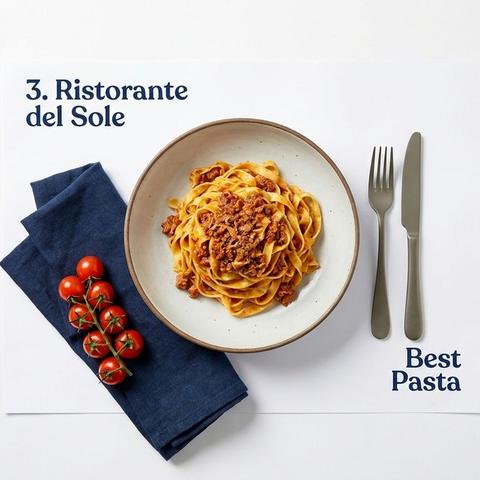
Tagliatelle bolognese in NYC ranges from a straightforward veal-and-beef ragù to a slow-braised three-meat version built to coat wide ribbons of pasta rather than drown them. Five Manhattan kitchens currently list a version on their own menus, from a $29 SoHo plate to a $33 uptown one, and each price below was checked against the restaurant’s own site or ordering page before it went into this post. Bolognese isn’t red sauce with extra meat — it’s a specific ragù, built low and slow for a pasta wide enough to hold it. Here’s where it’s still done properly, and what separates a good version from a lazy one.
Quick Answer
Order tagliatelle bolognese at a kitchen that makes its own pasta and gives the ragù real cooking time, not a quick simmer. Right now, that means Il Mulino, Frank, Osteria Morini, Sant Ambroeus, and Isabelle’s Osteria — five Manhattan rooms with a verified version currently on the menu, priced between $29 and $33.
At a Glance
- Best three-meat version: Il Mulino — veal, beef and pork, $33
- Best East Village pick: Frank — handmade tagliatelle, $32.95
- Best value: Osteria Morini — $29, SoHo
- Best uptown room: Sant Ambroeus — veal ragù, 24-month Parmigiano-Reggiano
- Best Gramercy Park option: Isabelle’s Osteria — $30, veal, beef and chicken
What Actually Makes a Bolognese a Bolognese
A real ragù bolognese starts with a soffritto of onion, carrot and celery, builds with ground meat browned slowly rather than seared hard, and finishes with milk or cream folded in near the end to soften the acidity of the tomato. The sauce is meant to reduce for a long stretch — kitchens that do it right are cooking the pot for two hours or more, not twenty minutes.
The pasta matters as much as the sauce. Tagliatelle’s width and rough, porous surface hold a meat ragù the way a thin strand like spaghetti can’t. A kitchen serving bolognese over spaghetti is usually cutting a corner somewhere else too — for more on how Manhattan kitchens handle house-made pasta shapes, it’s worth knowing which ones are actually rolling their own dough.
Tagliatelle Bolognese NYC: The Five Kitchens, Ordered by What They Do Differently
Il Mulino
Il Mulino’s tagliatelle alla bolognese lists homemade tagliatelle under a braised veal, beef and pork ragù for $33, the widest meat mix of the five. The restaurant has multiple Manhattan locations, a legacy that goes back to the 1980s Greenwich Village dining room the chain expanded from.
Frank
Frank, at 88 2nd Avenue in the East Village, lists fresh handmade tagliatelle bolognese at $32.95. It’s a narrow, always-crowded room — the kind of place where a wait at the door is normal on a Friday night, so a reservation or an early seating helps.
Osteria Morini
Osteria Morini’s SoHo dining room lists tagliatelle with bolognese and parmigiano at $29, the most affordable of the five and the same dish the restaurant’s other East Coast locations run under one recipe.
Sant Ambroeus
At the Madison Avenue location, Sant Ambroeus lists a version built on a light veal ragù finished with 24-month aged Parmigiano-Reggiano. It’s the most Milanese-leaning plate on this list, closer to the north-Italian original than the heavier Roman-trattoria style most of the others serve.
Isabelle’s Osteria
Isabelle’s Osteria, on Park Avenue South in Gramercy Park, lists its tagliatelle bolognese at $30, built on a veal, beef and chicken ragù. It’s a short walk from the 23rd Street stop on the 6 train, and the dining room seats comfortably enough for a weeknight dinner without a long wait. For the rest of the block, a full rundown of Park Avenue South’s Italian kitchens covers what’s within a few doors in either direction.
Isabelle’s isn’t the widest ragù on this list or the cheapest — Osteria Morini beats it on price, Il Mulino on the meat mix. What it offers is a Gramercy Park location that’s easy to reach on a weeknight and a version that splits the difference between the lighter Milanese style and the heavier Roman one. Check the current menu and hours before visiting, since kitchens adjust seasonal offerings.
Frequently Asked Question
Is bolognese the same thing as a basic meat sauce? No — a basic meat sauce is usually just browned ground beef stirred into a tomato sauce, while a proper bolognese ragù starts with a vegetable soffritto, uses a slower browning method, includes milk or cream to round out the acidity, and cooks for a long stretch rather than a quick simmer. The texture is the giveaway: a real bolognese clings to pasta in a thick, almost dry coating, not a wet, soupy one. Restaurants that serve it over a delicate strand pasta instead of a wide ribbon like tagliatelle or pappardelle are usually working from a shortcut version.
Call ahead or check each restaurant’s own site before booking, since kitchens rotate seasonal pastas and a ragù that’s on the menu today isn’t guaranteed for next month.
Between a three-meat uptown version and a $29 SoHo plate, tagliatelle bolognese in New York still rewards ordering from a kitchen that treats the dish as a technique, not a shortcut.
Editor’s note: Isabelle’s Osteria is affiliated with this publication. Restaurants were selected using the criteria described above.